By Faisal Khan | 28 July 2026
Medium
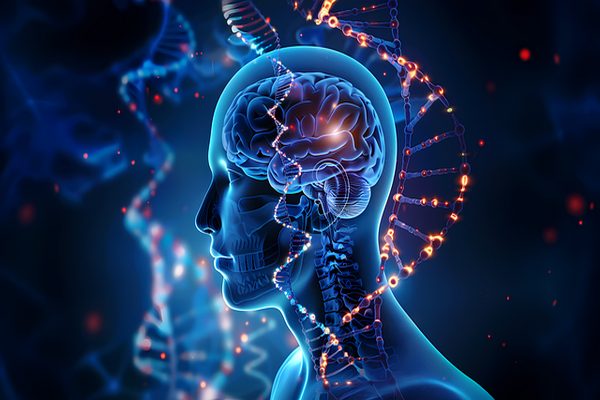
Cancer remains one of the leading causes of death worldwide, claiming nearly 10 million lives annually, according to the World Health Organization (WHO). Despite decades of research and significant advances in medicine, cancer continues to challenge patients and physicians alike due to its complex and adaptive nature. Conventional treatments — such as chemotherapy, radiation therapy, and surgery — have provided relief and prolonged survival for many.
However, they are often accompanied by severe side effects, limited by tumor resistance, and in many cases, fail to eliminate the disease entirely. Even newer therapies like targeted drugs and monoclonal antibodies offer only incremental improvements in many cases. Immunotherapy, particularly immune checkpoint inhibitors, has emerged in recent years as a promising new frontier.
By leveraging the body’s own immune system to detect and destroy cancer cells, these treatments have delivered remarkable results in some patients. Yet, this success has been uneven — many cancers remain impervious, and a large portion of patients either do not respond or relapse. The critical issue remains: how do we “teach” the immune system to recognize cancer cells in the first place?
A New Chapter in Cancer Immunotherapy
A groundbreaking study published today in Nature Biomedical Engineering offers a potential answer. Scientists from the University of Florida have shown that an experimental mRNA vaccine, when paired with immune checkpoint inhibitors, dramatically amplifies the immune system’s ability to attack tumors, at least in preclinical mouse models. The findings suggest that we may be inching closer to the long-elusive goal of a universal cancer vaccine.
🎗 A promising new cancer vaccine has entered human trials, offering hope for faster, broader treatment options.
Human trials have begun for an mRNA cancer vaccine that targets the body’s innate immune system instead of individual tumor types.
Developed by scientists at the… pic.twitter.com/QHCaNeH1BL
— Smart Science (@SmartScience) August 13, 2026
Immune checkpoint inhibitors work by blocking proteins that act as brakes on immune cells, essentially “releasing” the body’s natural defenses to attack cancer. While they have revolutionized treatment for certain cancers like melanoma and lung cancer, their efficacy is often hampered by the immune system’s failure to recognize tumors as threats. This lack of antigen recognition is precisely what the experimental mRNA vaccine seeks to correct.
The mRNA Platform: More Than a Pandemic Solution
The COVID-19 pandemic introduced the world to mRNA vaccine technology, which proved highly effective at delivering genetic instructions to elicit robust immune responses. But long before SARS-CoV-2, researchers had their sights set on using mRNA to combat cancer. The basic concept is elegant: mRNA is used to instruct cells to produce proteins associated with cancer, which are then displayed on the cell’s surface to flag them for immune destruction.
The Mouse Study: A One-Two Immunological Punch
In the novel study, the research team developed an mRNA vaccine specifically designed to deliver tumor antigens to immune cells. This “priming” of the immune system — on its own — triggered a moderate response in mice. But when combined with immune checkpoint inhibitors, the results were dramatically enhanced, producing what the researchers described as a powerful, systemic antitumor effect.
The combination therapy worked much like a well-coordinated military strike. The mRNA vaccine served as reconnaissance, identifying enemy targets (tumor cells), while the checkpoint inhibitors unleashed the immune system’s arsenal. The study, led by Dr. Elias Sayour, showed that the pairing not only reduced tumor burden but, in some cases, led to complete tumor regression in mice.
A year ago, RFK Jr. killed $500 million in mRNA vaccine research, claiming the technology didn’t work against illnesses like the flu.
While he pushes conspiracy theories and cuts research funding, the FDA has approved the first mRNA flu vaccine in U.S. history.…— Congressman Raja Krishnamoorthi (@CongressmanRaja) August 10, 2026
Equally important was the nature of the immune response: it was targeted and controlled, avoiding the overactive inflammation or autoimmune complications that can accompany some immunotherapies. This suggests that such a combination may be both powerful and safe — a crucial requirement for eventual human application.
“This finding is a proof of concept that these vaccines potentially could be commercialized as universal cancer vaccines to sensitize the immune system against a patient’s individual tumor.”
~ Dr. Elias Sayour, Lead Researcher
The Vision: Toward a Universal Cancer Vaccine
What sets this approach apart is its scalability. Traditional cancer vaccines have often been personalized, requiring a unique formulation for each patient’s tumor — an approach that is both time-intensive and expensive. In contrast, the mRNA vaccine used in the University of Florida study targets common antigens shared across many tumor types.
This opens the door to developing a more “universal” solution — an off-the-shelf vaccine that could work across a wide range of cancers. Such a development would be a game-changer, particularly in global oncology, where access to cutting-edge, personalized therapies remains limited. A universal cancer vaccine could democratize advanced cancer care, bringing high-tech immunotherapy to a broader patient base.
The U.S. Food and Drug Administration has approved a new seasonal flu vaccine from Moderna that uses mRNA technology, the drugmaker announced Wednesday.
mFLUSIVA, approved for adults ages 50 and older, is the first influenza vaccine using mRNA technology to receive FDA approval.… pic.twitter.com/2sc00uIQgl
— CBS Mornings (@CBSMornings) August 6, 2026
Of course, as with all early-stage research, caveats abound. Mouse models, while valuable, do not always predict human outcomes. Human immune systems are far more complex, and tumors in people evolve more dynamically than in controlled lab settings. Nonetheless, the data are highly encouraging and provide a compelling rationale for advancing to clinical trials.
Looking Ahead: Challenges and Hope
Other biotech companies, including Moderna and BioNTech, are already pursuing mRNA-based cancer vaccines. Moderna’s personalized melanoma vaccine, in combination with Keytruda, has shown promising early results in human trials. The UoF work complements these efforts by suggesting that broader, non-personalized vaccines may also be viable and perhaps more scalable.
The path forward will involve fine-tuning the antigen selection process, ensuring long-lasting immune memory, and proving safety and efficacy in diverse human populations. But the pieces of the puzzle are beginning to come together.
Reimagining the Future of Cancer Treatment
In the relentless fight against cancer, each scientific breakthrough adds a new weapon to our arsenal. This experimental mRNA vaccine, when combined with existing immunotherapies, could represent a pivotal advance in our understanding of how to train the immune system to identify and destroy tumors. By harnessing the precision of mRNA technology and the power of immune checkpoint blockade, researchers are beginning to unlock new levels of immune control and specificity.
While the dream of a universal cancer vaccine remains elusive, it’s now closer than ever before. This study is more than a promising result in mice; it is a glimpse into the future of oncology — a future where vaccines may not only prevent infectious disease, but also serve as powerful agents in the war against cancer.
Complete research was published in the Journal of Nature Biomedical Engineering and supported by multiple federal agencies and foundations, including the National Institutes of Health.
A major milestone.
The FDA has approved the first mRNA influenza vaccine, expanding the same vaccine platform first used against COVID.
A reminder that even as this scientific milestone is being celebrated, this administration has dismantled large parts of the US mRNA research… pic.twitter.com/bFq46bZpI0
— Dr. Catharine Young (@DrCatharineY) August 6, 2026
Reprinted with permission from the author.
Faisal Khan is a prolific Canada-based tech blogger and influencer. He is the founder and editor of the Technicity publication which focuses on technical, scientific and financial knowledge sharing. Follow him on Twitter @fklivestolearn.

mRNA Vaccines: A Revolution in Immunization
Scientists Just Discovered How to Starve Cancer
Moderna says new mRNA vaccine stops melanoma from returning
Be sure to ‘like’ us on Facebook