


By Robson Tramontina | 8 October 2026
The Conversation

AI company Anthropic recently announced that its popular system Claude had identified an unusual family of biological molecules. These molecules were enzymes, a type of protein that speeds up chemical reactions in living organisms.
The new group of enzymes were discovered in bacteriophages – viruses that infect bacteria. Anthropic named them array-associated reverse transcriptases (ARTs).
The finding was presented as an example of AI initiating biological discovery. However, a researcher studying the same enzymes then raised a question: had Claude independently recognised their significance, or could unpublished work shared with the chatbot have influenced its result?
Mario Rodríguez Mestre, a PhD candidate in computational biology at the University of Copenhagen in Denmark, says his team members have been investigating these enzymes, which they call “jumbotrons”, since 2022. According to The Scientist magazine, he shared his dissertation and manuscript drafts with Claude.
Did @AnthropicAI ‘s A.I. Really Make a Scientific Discovery on Its Own?
Or did they steal information from scientists?…..AGAIN.
@NatureNV @NewsfromScience
https://t.co/tFSLee1mEB
— Rebecc@ ███████ (@Rebecca21951651) September 28, 2026
Anthropic denies that the model was trained on user transcripts or that its biology team had access to them. Mestre’s concerns and Anthropic’s response raise a question that the available reporting cannot independently resolve. There is no established evidence that his unpublished material was used in the discovery.
Mestre is named among the inventors of a patent for engineered “retrons”, genetic systems that contain a reverse transcriptase enzyme and an associated RNA. The patent also lists reverse transcriptase sequences from jumbo phages, the type of virus involved in Anthropic’s announcement.
Its US application was published in July 2023. This documents earlier work on jumbo-phage reverse transcriptases. But alone it does not establish that the fully system of enzymes described by Anthropic had already been characterised by Mestre’s team.
What was actually found?
Reverse transcriptases are enzymes that copy RNA (a single-stranded molecule that’s essential in most biological functions) into DNA (the double-stranded molecule carrying the instructions for life). Scientists use them in research and diagnostic tests, including some COVID tests.
As scientists increasingly incorporate artificial intelligence into their work, it raises the question: What does it mean to be an author in the age of #AI?
Learn more: https://t.co/QSUNhJJfp4 https://t.co/A3njOz2iDi
— News from Science (@NewsfromScience) October 29, 2026
They also help researchers measure which genes are active in cells, providing clues about cellular function. The enzyme at the centre of Anthropic’s announcement had already been identified by a team of American scientists from Texas A&M University.
What the company claims to have recognised is a larger biological system: the enzyme, a series of repeated DNA sequences, and a possible partner protein. The researchers found that these repeated sequences produce small RNA molecules.
Some of that evidence came from reanalysing data published by another research team in 2022. This illustrates how existing data can reveal new findings while highlighting the importance of crediting the scientists who originally produced them.
Human scientists conducted the laboratory experiments, and important questions remain unanswered. The researchers have not yet shown that this enzyme is active, that it copies the associated RNA molecules into DNA, or what the system does in the virus.
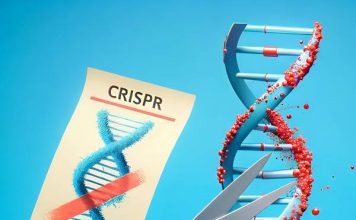
Its resemblance to Crispr, the well-known gene editing tool, has attracted attention. But that resemblance does not mean ARTs can edit genes: this remains a possibility to investigate, rather than a proven application.
How do scientists check an AI discovery?
The Anthropic report about Claude’s findings explains why checking an AI discovery matters. In ten additional search runs, the agents missed the repeat array. Some models could recognise it when given the relevant sequences directly, but recognising a supplied pattern is different to finding it independently.
This limits claims of a consistently autonomous discovery process by Claude. However, it does not show that the biological finding is wrong. The Anthropic report has not yet been peer reviewed.
In my own ongoing research, I use AI to turn biological questions into code and help interpret results. I then develop a documented analysis that other scientists can check and repeat. Researchers should also record the model and instructions used whenever AI is essential to the method.
I joined @GoogleDeepMind to develop a research program on the economics of AGI. Today, together with Andrew Koh (@andrewjkoh) and Shane Legg (@ShaneLegg), we are incredibly excited to release The Economics of Intelligence, the first in a series of projects from our group on how AGI will change the economy.
How do capability improvements transform the economy, and when? In this project, we define thresholds of economic capabilities, e.g., minimal AGI, based on how they transform the economy. We then track how the economy–market structure, employment, and wages–changes during the transition across capability regimes.
We have seen exponential increases in what AI agents can do but the broader economy seems almost remarkably unchanged. Part of the reason is that the solo AI agent is the wrong economic object; economic transformation is an equilibrium outcome where organizations compete. Looking at how intelligence functions within organizations, transformation will depend on when two key capability thresholds are crossed: competence (gains on individual skills, e.g., coding, math) and coordination (gains on ability of agents to cooperate and work together).
We show that what economic transformation looks like depends on whether AI becomes supercompetent, supercooperative, or both—the regime of artificial superintelligence (ASI). Tracking this transition shows why the real visible transformation may come from improvements in coordination—a capability most benchmarks don’t yet track. Past a certain threshold, AI capabilities can break the Coasian ceiling on firm size and lead to an economy that looks drastically different than the one we see today.
Two main takeaways:
1. To understand the path of transformation, we should be tracking agentic coordination more closely.
2. The impact of AI will likely show up in wages before market structure or employment.We are really excited about this paper. Excited to hear people’s thoughts.
Link: https://t.co/9DTGSeKoSA
— Alex Imas (@alexolegimas) October 29, 2026
Before sharing unpublished research with an AI tool, scientists should consult their university’s guidance and seek training on responsible use. Guidelines at the University of Manchester, where I work, advise researchers to protect confidential information, verify sources and keep records of their AI use. A paid subscription does not automatically ensure that research remains private or is excluded from model training.
Anthropic’s personal and business services have different rules. Commercial services exclude inputs and outputs from training by default, though exceptions may apply when users give permission or submit feedback. Their current policies alone cannot tell us what happened to the information Mestre says he shared.
Keeping files on your own computer also does not mean that everything stays there. Claude Science says that datasets and calculations can remain on the researcher’s computer, while the instructions sent to the AI and its replies are processed by Anthropic. Researchers should therefore check what information leaves their computer, how long it is kept and whether it can be used to train models.
Confidential material should only be shared when institutional rules and permissions allow it.
The ART findings raise interesting biological questions, but further experiments are needed to establish what the Claude system does. The debate also highlights a broader issue: how we recognise scientific contributions when AI is involved.
In this instance, credit should acknowledge the researchers who produced the original data, identified the enzymes and uncovered connections between them. Announcements about AI discoveries should explain those human contributions as clearly as they describe what the AI achieved.

AI INSIDER: The Takeover Has Already Started
“I Couldn’t Stay There”: Google Engineer Resigns over AI Used for Weapons, Surveillance, Gaza War
Bill Gates says to prepare for 20 years of tumultuous AI disruption
Be sure to ‘like’ us on Facebook