




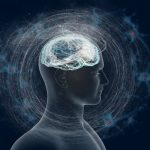
How researchers use new tools to map the structure and function of the brain
While a grand unified theory of the brain still remains elusive, new tools are helping researchers excavate its hidden depths.

Solving Humanities Greatest Challenges
Science continues to produce amazing breakthroughs in a synergistic relationship with technology.
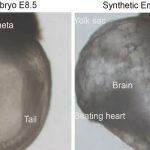
Scientists create world’s first synthetic embryos
Researchers have created the world's first synthetic embryos in a groundbreaking feat that bypassed the need for sperm, eggs and fertilisation.
Revolutionary brain-computer interface offers hope to paralysed patients
A 48-year-old in New York City has become the first to receive a permanent brain implant that could allow him to communicate telepathically.
Presenting a fine-tuned CRISPR-Cas9 gene editor
The novel approach adopted for the "molecular scissors" significantly reduces the chance of potentially harmful mutations.

Living An Extra One Hundred Years
Senolytics drugs are already showing promising results and could become available on the market within the next decade.
The Human Genome Project pieced together only 92% of the DNA – now scientists have finally filled in the remaining 8%
When the Human Genome Project announced that they had completed the first human genome in 2003, it was a momentous accomplishment.
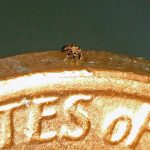
Scientists create the smallest-ever remote-controlled walking robot
The robotic crab is smaller than a flea and can carry out multiple activities like walking, bending, twisting, turning, and jumping.
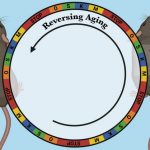
Scientists can reverse ageing in mice. The goal is to do the same for humans
Using proteins that can turn an adult cell into a stem cell, researchers have reset ageing cells in mice to earlier versions of themselves.

The next eight years will make all of the difference
The next eight years will be a time of massive progress that will bring social change at a speed we have never dealt with before.
SIGN OUR PETITION











