




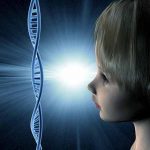
We can identify ‘bad’ genes. Why can’t we use CRISPR gene editing to get rid of them?
A desirable option would be to use CRISPR gene editing to essentially cut out the unwanted gene. There are, however, many challenges ahead.
The four drivers of Artificial Intelligence
Professor Hod Lipson, Columbia University, discusses the four drivers of artificial intelligence and their impact on how we live and work.

Singularity: how governments can halt the rise of unfriendly, unstoppable super-AI
Prominent contemporary scientists and engineers are now also worried that super-AI could one day surpass human intelligence.

The Augmented Age
We are heading for a future where our natural human capabilities are going to be radically augmented in three ways.

A world of Methuselahs?
On balance, it can be argued, life extension is a good thing and life extension research should be funded aggressively.

How synthetic biology will improve Earth and space exploration
The same synthetic biology technologies that will help sustain us on Earth will also support our journey to inhabit the stars.

Human-animal hybrids are coming and could be used to grow organs for transplant – a philosopher weighs in
Some might feel that human-animal hybrids are a threat to human dignity. But it’s difficult to specify what this claim really amounts to.

Creating Superman (and woman): Who benefits from human enhancement?
From any combination of a number of approaches, real-life human enhancement is looking ever more achievable.

The Supposed Dangers of Techno-Optimism
There is no risk-free way to proceed into the future. In the end, only science and technology properly applied have the power to save us.
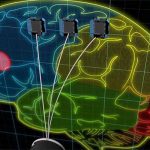
Brain-Computer Interfaces: From Past to Future
In 1973, for the first time, the term “brain-computer interface” was used – a computer-based neuro interface.
SIGN OUR PETITION











