





How neuroethics can advance innovations for positive social impact
Neuroethics might just be one of the most essential tools to advance and accelerate the most impactful neuroscience.
Researchers have grown ‘human embryos’ from skin cells. What does that mean, and is it ethical?
Researchers have successfully grown model versions of early human embryos by "reprogramming" cells from human skin.

Researchers have success repairing spinal cord injuries with patients’ stem cells
Scientists working out of Yale University and Japan’s Sapporo Medical University have been able to successfully repair spinal cord injuries using stem cells.

How Mathematical Proofs can Help Unlock the Secrets of the Brain
The link between mathematics, engineering, and neuroscience will only continue to become ever more stronger. It has to.
Is Your Brain a Computer? The Two Sides of the Answer
The metaphor of the brain as a computer has been discussed by neuroscientists for decades. And its controversy still holds today.

Will robots make good friends? Scientists are already starting to find out
Robotic companionship can constructively augment people's lives, leading to friendships that are comparable to human-to-human relationships.

New CRISPR technology could revolutionise gene therapy, offering new hope to people with genetic diseases
Using 'base editing', researchers have cured progeria in mice. This genetic syndrome causes premature ageing in humans.

Artificial intelligence can deepen social inequality. Here are 5 ways to help prevent this
With AI decision-making tools, we have an opportunity to increase productivity and create a more just society – that is, if we use them carefully.

Genetic engineering transformed stem cells into working mini-livers that extended the life of mice with liver disease
Scientists are figuring out the genes necessary to produce the variety of mature cells needed to construct a functioning liver.
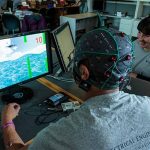
Brain-controlled computers are becoming a reality, but major hurdles remain
Imagine controlling your computer just by thinking. It sounds far-out, but real advances are happening.
SIGN OUR PETITION











