




By James A. Haught | 29 December 2022
Freethought Now
When President Kennedy hosted a White House dinner for several Nobel Prize winners, he quipped: “I think this is the most extraordinary collection of talent, of human knowledge, that has ever been gathered together at the White House — with the possible exception of when Thomas Jefferson dined alone.”
Jefferson, who led the creation of the first modern democracy, also had contempt for supernatural religion. He wrote many sneers like this:
“The day will come when the mystical generation of Jesus, by the supreme being as his father in the womb of a virgin, will be classed with the fable of the generation of Minerva in the brain of Jupiter.” — letter to John Adams, April 11, 1823
“Priests of the different religious sects … dread the advance of science as witches do the approach of daylight, and scowl on the fatal harbinger announcing the subdivision of the duperies on which they live.” — letter to Correa de Serra, April 11, 1820
Mike Pence: Americans have no right to 'freedom from religion'.
Thomas Jefferson: "WRONG. As we wrote in the First Amendment,… 'Congress shall make no law respecting an establishment of religion.' Get a clue, Dumbass." pic.twitter.com/OEZc6Owzme
— Roshan Rinaldi (@Roshan_Rinaldi) October 27, 2022
Through history, vast numbers of thinkers, scientists, writers, scholars, reformers, leaders and others considered “great” have doubted supernatural religion. Philosopher Prodicus of Ancient Greece (c. 400 BCE) said: “The gods of popular belief do not exist.” Roman orator Cicero (106–43 BCE) stated: “There are no miracles.” Here are some others, in historical sequence.
Omar Khayyam (c. 1100 CE): “Oh, threats of hell and hopes of paradise / One thing is certain: this life flies / One thing is certain, and the rest is lies / The flower that once has blown forever dies.” — The Rubaiyat, translated by Edward Fitzgerald
Michel de Montaigne (late 1500s): “Man is certainly stark mad; he cannot make a worm, yet he will make gods by the dozen.” — Essays, 1580
Voltaire (1694-1778): “Christianity is the most ridiculous, the most absurd and bloody religion that has ever infected the world.” — letter to Frederick the Great
Thomas Paine (1737-1809): “All national institutions of churches, whether Jewish, Christian or Turkish, appear to me no other than human inventions, set up to terrify and enslave mankind, and monopolize power and profit.” — The Age of Reason, 1794
“I view things as they are, without regard to place or person; my country is the world, and my religion is to do good.”
— Thomas Paine, born just south of Thetford Forest in Norfolk on 29 January 1737; fomenter of revolutions, ardent foe of kings, queens, knaves and aristocrats. pic.twitter.com/NmFI2wruqh— John Nichols (@NicholsUprising) January 29, 2019
Napoleon Bonaparte (1769-1821): “I would believe in a religion if it existed ever since the beginning of time, but when I consider Socrates, Plato, Mohamet, I no longer believe. All religions have been made by men.” — to Gaspard Gourgaud at St. Helena, Jan. 28, 1817
Percy Shelley (1792-1822): “There is no God.” — opening line of The Necessity of Atheism, 1811
Ralph Waldo Emerson (1803-1882): “As men’s prayers are a disease of the will, so are their creeds a disease of the intellect.” — Self-Reliance, 1841
Charles Darwin (1809-1882): “The mystery of the beginning of all things is insoluble by us, and I for one must be content to remain an agnostic.” — The Autobiography of Charles Darwin, republished 1958
Mark Twain (1835-1910): “I cannot see how a man of any large degree of humorous perception can ever be religious — unless he purposely shut the eyes of his mind & keep them shut by force.” — private notebook 27, 1887-88
Thomas Edison (1847-1931): ‘Religion is all bunk. … All bibles are man-made.” — newspaper interview.
Sigmund Freud (1856-1939): “Neither in my private life nor in my writings have I ever made a secret of being an out-and-out unbeliever.” — letter to Charles Singer
George Bernard Shaw (1856-1950): “At present there is not a single credible established religion in the world.” — preface of Major Barbara, 1905
Bertrand Russell (1872-1970): “Religion is based, I think, primarily and mainly upon fear.” — Why I Am Not a Christian, 1927
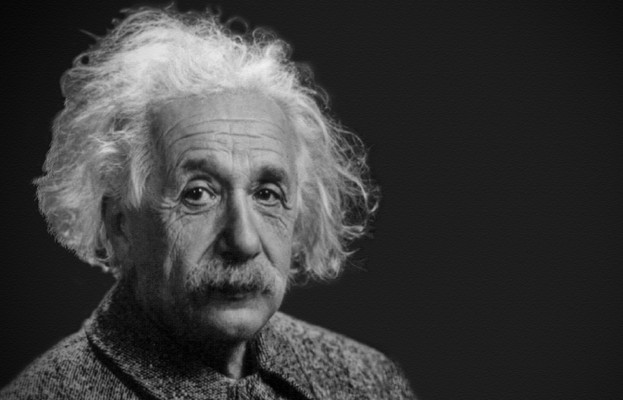
Albert Einstein (1879-1955): “I cannot imagine a god who rewards and punishes the objects of his creation, whose purposes are modeled after our own — a god, in short, who is but a reflection of human frailty. Neither can I believe that the individual survives the death of his body, although feeble souls harbor such thoughts through fear or ridiculous egotism.” — New York Times Magazine, Nov. 9, 1930
I’ll stop at the early 20th century, because this essay is growing too long. We skeptics today can feel proud to share the outlook of so many outstanding thinkers.
Reprinted with permission from the author.
 James A. Haught is editor emeritus of West Virginia’s The Charleston Gazette-Mail and a senior editor of the Free Inquiry magazine. He is also the author of numerous books and articles; his most recent book is Religion is Dying: Soaring Secularism in America and the West (Gustav Broukal Press, 2010). Haught has won 21 national newswriting awards and thirty of his columns have been distributed by national syndicates. He is in Who’s Who in America, Who’s Who in the World, Contemporary Authors, and 2000 Outstanding Intellectuals of the 21st Century. His website is haught.net.
"Holy Horrors: An Illustrated History of Religious Murder and Madness" by James Haught. https://t.co/Mt7KVrhHMD pic.twitter.com/91SMfcVXlK
— Church and State (@ChurchAndStateN) March 18, 2019

Jefferson: Religion is the Tyranny Over the Mind of Man…
Best of Founding Fathers Anti-Religion Quotes
Be sure to ‘like’ us on Facebook








