




By Ed Buckner | 30 May 2025
Letters to a Free Country
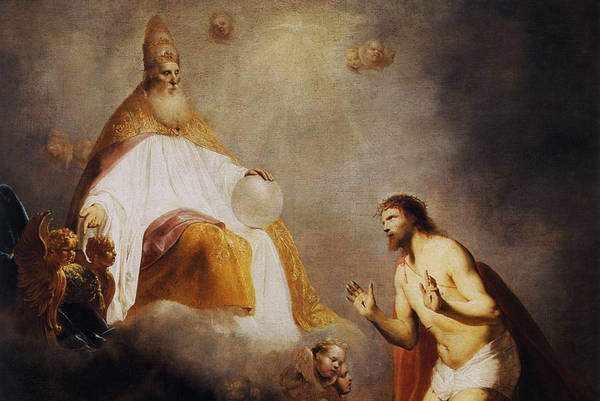
Atheists like me are accused of having so much interest in fighting about “God” that we must secretly or unconsciously believe in Him—or at least fear that we do or should. Why, we’re asked, don’t we just leave the believers alone?
I do not pretend to write on behalf of all atheists. But I do assert, emphatically, that I’d be happy to live and let live—to leave all believers, of any religious variation, alone with their god-beliefs, under a few clear conditions:
- Believers don’t attempt to use the power of governments or of the majority to prop up their commitment to Allah or Jehovah or Jesus or Zeus, etc.
- Believers don’t demand any kind of special protections (blasphemy laws, for example) or that they as believers get respect or consideration not given us nonbelievers.
- Believers don’t try to use violence or force to get folks to buy what they’re selling.
In short, I’ll happily live and let live if others do, too.
And I’ll freely debate and discuss all this with those who want that—and leave alone those who want that.
This is atheism in a nutshell.
— The Ricky Gervais Clips (@gervaisclips) June 10, 2025
Why the Continuing Barrage of Questions?
It’s tempting to say the questions persist, “Because Christians are profoundly insecure in their beliefs and desperate to ‘prove’ they’re right.” And that likely is true for some.
For others it’s probably ignorance: they honestly haven’t seen the answers to what they sincerely (if wrongly) think are unanswerable questions.
And maybe for some it’s a sort of over-confidence: they’ve heard the counter-arguments, but they’re sure they’re right and that, however sound the objections seem to be, those arguments are just those of the devil or something of the sort.
And some—perhaps most?—simply believe that it’s all too complicated for mere human beings to grasp and that what is needed is “faith.” The questions these believers seem unable to answer fully is “Faith in what? And why that?”
Many of the perennial just-cannot-be-answered (surely) questions are straw man arguments or arguments based on a false starting point or assumption. Of the “why do atheists think . . . “ questions when in fact most of us don’t think that way at all.
In the 2nd edition of "God and Horrendous Suffering" will be the first ever full chapter on "The Emotional Problem Evil." pic.twitter.com/8CSJVf6oJE
— John W. Loftus, MA, MDiv, ThM, + PhD work. (@loftusjohnw) June 15, 2025
Brief Rebuttal of Unsound Arguments
- God’s existence is proven (or at least supported) by the existence of atheists. This is farcical on its face. It would be exactly the same as saying that the fact that there people (like you!) who don’t accept that the core of the moon is molten peanut butter is proof (or at least evidence) that it actually is peanut butter.
- If God exists, then atheism is false. God exists. Therefore atheism is false. The second statement is merely a restatement of the first, and not in any sense evidence that it’s true. If one wants to demonstrate that God exists, it takes something more than claiming or asserting it.
- Atheists can’t prove God doesn’t exist, so the claim of atheists that believers must prove God does exists is unreasonable. There is a quite basic difference between proving (or providing evidence) that something exists and proving (or providing evidence) that something does not. We may quite safely assume that a (nearly) infinite number of things—teapots in orbit*, invisible pink unicorns*, an undiscovered planet the size of Mars between Earth and Mars, et cetera—don’t exist. And the only thing we need for support is the knowledge that we have no evidence that they do. Might God exist without any evidence? Not if “God” has any intelligible meaning. That God may possibly exist without being provably in existence is more arguable, more a possible matter for faith. A person’s “direct experience” of a god may be considered evidence by that person. But not a matter that anyone without faith or direct experience is obligated to take seriously, much less accept. One person’s experience or faith is another’s possible delusion, of course.
There are more complex, subtle arguments offered in support of theism—the kalam cosmological argument, the “fine-tuning,” and others. All of these have been, it seems to me, answered quite thoroughly, too.
- teapots in orbit—Bertrand Russell’s satirical idea
- invisible pink unicorns—Edwin Kagin’s satirical idea
Why Do Theists Keep Asking Already Answered Questions?
Why do theists keep asking already answered questions? I don’t really know and I’m not sure they do, either.
Ed Buckner is an American atheist activist who served as president of the organization American Atheists from 2008 to 2010. He served as executive director for the Council for Secular Humanism from 2001 to 2003 and was once the Council’s southern director. He is the author (with Michael E. Buckner) of In Freedom We Trust: An Atheist Guide to Religious Liberty (Prometheus Books, 2012).
“In Freedom We Trust: An Atheist Guide to Religious Liberty” by Ed Buckner and Michael Buckner.
https://t.co/GVD6DvudSE— Church and State (@ChurchAndStateN) February 13, 2023

“Letter to a Free Country” by Ed Buckner (with Q&A)
Is New Atheism Losing? | A Conversation with Matt Ridley
Richard Dawkins: Why atheism is winning
Be sure to ‘like’ us on Facebook














Many thanks to Lola Heavey–as always, it's an honor to have her publish my words.
The honour is always mine, Ed.